Inlays and Onlays in Madison, AL

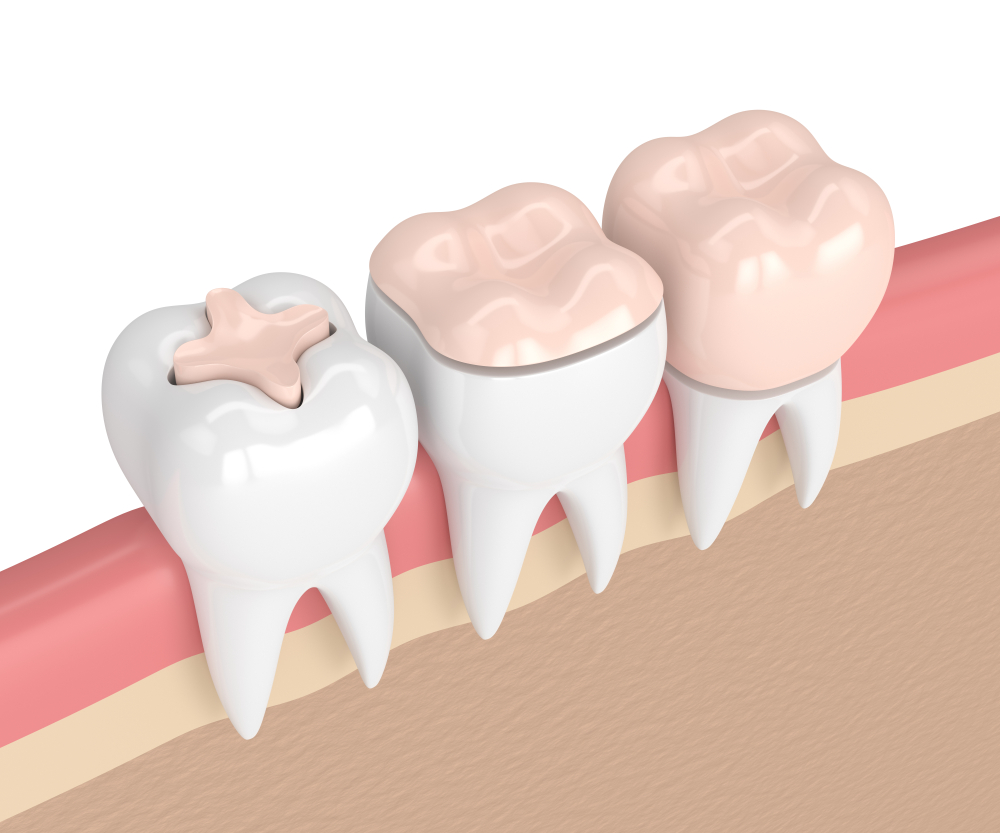
inlay, onlay, and crown

Advanced Restorations for Stronger, Longer-Lasting Teeth

When a tooth is too damaged for a simple filling but doesn’t require a full crown, inlays and onlays offer an ideal middle ground. Dr. Burgess, Dr. Roth, and Dr. Randall at Madison Dental Care provide these indirect restorations to repair significant damage, reinforce tooth structure, and maintain your tooth’s natural appearance. This highly precise method provides superior durability compared to large fillings.

Often called partial crowns, inlays and onlays are custom-made restorations fabricated in a dental lab from materials like porcelain, ceramic, or gold.

Ready to find the ideal solution for your damaged tooth? Call your Madison dental office today at (256) 772-2626 to book your consultation. We are proud to offer advanced restorative care to patients in Madison and the surrounding communities of Huntsville, Athens, and Decatur.

Our Friendly and Welcoming Staff Near You at Madison Dental Care

Our team prides itself on creating a warm, family-like atmosphere from the moment you walk in. Patients often highlight how our front desk, hygienists, and doctors make every visit feel personal and enjoyable.

  • “The staff greeted me as if they have known me for a lifetime. This made me feel very good. The Dr and his staff was very professional and knew the job and executed very well.”Dewayne R.
  • “Everyone is so friendly! I am normally a very anxious person when it comes to the dentist but the staff made it so easy for me. Everyone looks directly at you and greets you by name! Best dentist visit I have ever had!”Elizabeth L.
  • “The staff are courteous and professional, and the dental care is top notch!”Richard B.
  • “I can’t say enough wonderful things about Madison Dental Care! From the moment you walk in, the front staff, especially Shyane, makes you feel right at home. Her warmth and professionalism set the tone for a truly exceptional experience.”Shanaya T.

What Are Inlays and Onlays?

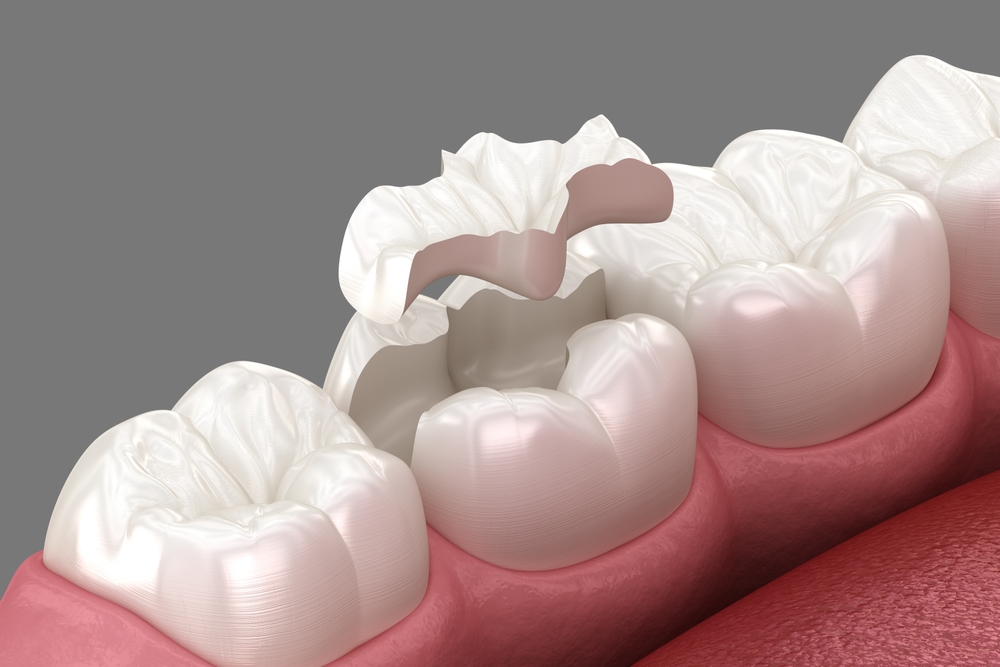
Inlays and onlays are specialized dental restorations fabricated outside of the mouth (indirectly) and used to repair posterior (back) teeth that have suffered moderate damage from decay or fracture. The primary difference lies in how much of the chewing surface they cover.

  • An inlay fits within the cusp tips (the points) of the tooth, similar to a standard filling but covering a broader internal surface.
  • An onlay is more extensive, covering one or more cusps of the tooth.

Because onlays cover the cusps, they provide additional protection against fracture by holding the weakened tooth structure together. Both types are custom-made to perfectly fit the prepared area, offering an exact and highly durable repair.

Inlays and Onlays: Material Options

Inlays and onlays are distinguished by the material used in their fabrication, which dictates their strength, appearance, and suitability for different areas of the mouth. We will discuss the best material choice based on your specific needs, bite forces, and aesthetic goals.

  • Porcelain (Ceramic) Inlays and Onlays: These are the most popular choice due to their outstanding aesthetics. They can be perfectly shade-matched to your surrounding teeth and offer great strength for moderate repairs.
  • Composite Resin Inlays and Onlays: While often used for direct fillings, composite resin can also be fabricated indirectly in a lab, resulting in a stronger, better-fitting restoration than a large direct filling.
  • Zirconia Onlays: Zirconia is a newer, exceptionally strong ceramic material that combines the durability needed for heavy biting forces with excellent cosmetic results. It is often used for extensive onlays on posterior teeth.

Restorative treatment helps maintain your facial structure and prevent common oral health issues associated with tooth loss

dental inlay

Benefits of Inlays and Onlays

Choosing an inlay or onlay provides a host of advantages over a large filling or a full crown, offering a balance of protection, appearance, and conservation of your natural tooth. This approach results in a restoration that lasts longer and maintains the tooth’s structural integrity better than traditional methods.

  • Longer Lifespan: Custom-made in a lab, these restorations are cured under ideal conditions, making them significantly stronger and less prone to fracture or wear than large fillings, often lasting for decades.
  • Preservation of Tooth Structure: They are highly conservative, allowing the dentist to remove only the decayed or damaged part of the tooth and keep more healthy structure intact.
  • Superior Margins: The custom fit means the restoration’s edges meet the tooth precisely, minimizing the risk of gaps where bacteria can enter and cause recurrent decay.
  • Enhanced Strength: Especially onlays, they cover and reinforce weak cusps, helping to hold the remaining tooth structure together and prevent fractures from heavy chewing forces.
  • Ideal Aesthetics: Porcelain and ceramic options perfectly mimic the natural light-reflecting properties of tooth enamel, making the repaired tooth indistinguishable from its neighbors.
  • Stain Resistance: The smooth, dense surface of lab-fabricated porcelain and ceramic is highly resistant to staining, maintaining its color far better than composite resin fillings over time.
  • Accurate Bite: The indirect fabrication process ensures the restoration precisely matches the contours and contact points of the opposing tooth, leading to a comfortable and functional bite.

Who Is a Good Candidate?

Inlays and onlays are specifically designed for patients with damage that falls between the scope of a small filling and the need for a full crown. A thorough examination by one of our doctors will confirm if this treatment is appropriate for you.

  • Teeth with Large, Failed Fillings: Candidates often have large, old amalgam or composite fillings that are breaking down, cracking, or showing signs of leakage.
  • Teeth with Significant Decay: Patients with moderate to large cavities that require too much tooth structure removal to support a simple filling.
  • Teeth with Cracks or Fractures: Teeth that have minor fractures in the cusps or chewing surface, but still have adequate healthy tooth structure remaining.
  • Patients Seeking Conservative Care: Individuals who want to preserve as much of their natural tooth as possible while still achieving a durable, long-lasting repair.
  • Teeth Requiring Reinforcement: Teeth, particularly back molars, that need structural support on their cusps due to trauma or wear, which an onlay can provide.
  • Aesthetically Minded Patients: Anyone who wants a restoration that is metal-free and seamlessly blends with the natural color and contours of their smile.
patient attends regular dental exam and cleaning

The Inlay and Onlay Process

Receiving an inlay or onlay typically requires two visits to our Madison office. This two-visit structure ensures the custom restoration is fabricated perfectly and securely bonded for maximum lifespan.

Visit 1: Preparation and Impression

The first step involves numbing the tooth and gently removing all existing decay, old filling material, and compromised tooth structure. The doctor then shapes the remaining tooth to prepare a clean, sound surface for the restoration.

Capturing the Tooth Model

Once prepared, a highly accurate impression or digital scan of the tooth is taken. This precise model is sent to the dental lab, where your custom inlay or onlay will be expertly crafted over approximately two weeks.

Temporary Restoration Placement

To protect the prepared tooth while the final restoration is being made, a temporary filling or temporary onlay is securely placed. This restoration protects the tooth and allows you to function normally in the interim.

Visit 2: Bonding and Cementation

When the custom restoration arrives from the lab, the temporary is removed. The doctor cleans the tooth and meticulously checks the fit, marginal seal, and color match. Once confirmed, the inlay or onlay is permanently bonded to the tooth using a strong dental cement.

Final Polish and Adjustment

After cementation, the doctor carefully polishes the restoration and makes any necessary minor adjustments to ensure the highest level of comfort and that your bite is perfectly aligned.

Caring for Your Inlay and Onlay Results

Inlays and onlays are designed to be extremely durable, often lasting longer than traditional fillings. Their longevity, however, relies heavily on consistent and careful oral hygiene habits at home and professional maintenance.

  • Brush and Floss Gently: Treat the restored tooth like your natural teeth, brushing twice daily and flossing around the restoration daily to keep the margins clean and free of plaque.
  • Regular Dental Visits: Keep your scheduled six-month check-ups and dental cleanings so Dr. Burgess, Dr. Roth, or Dr. Randall can examine the condition of the restoration and the underlying tooth.
  • Avoid Extreme Forces: Refrain from habits like chewing ice, using your teeth to open packages, or biting on hard candies, which can damage any dental restoration.
  • Wear a Nightguard if Needed: If you are known to clench or grind your teeth while sleeping, we highly recommend a custom-fitted nightguard to protect your onlay from excessive pressure.
  • Check for Chips: If you ever notice a sharp edge, crack, or feel a change in your bite, contact our office immediately for an evaluation.

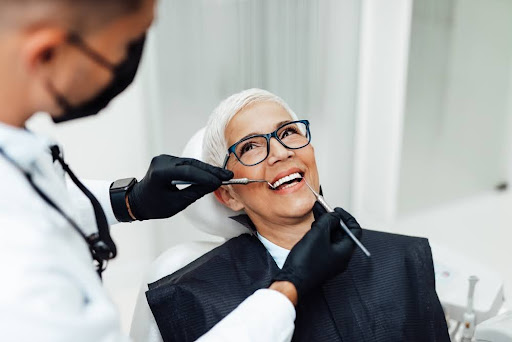
patient smiling in dental chair

Dental Restoration Costs & Financing

The cost of an inlay or onlay is generally higher than a simple filling but less than a full crown, reflecting the two-visit procedure and the custom fabrication process. The total investment depends on the size of the restoration, the type of material chosen (porcelain is often higher than gold), and the complexity of the tooth’s preparation. We believe in open communication regarding fees and are happy to provide detailed estimates.

  • Insurance Coverage: Many dental insurance plans offer coverage for inlays and onlays, typically classifying them as a major restorative procedure with 50% coverage.
  • Material Impact: Lab-fabricated ceramic and gold restorations have different production costs, which will be reflected in the final fee.
  • Complexity: A standard inlay is generally less costly than an extensive onlay that requires multiple cusps to be covered and reinforced.
  • Financing Solutions: To help manage the cost, we provide various payment plans and financing options. Please speak with our administrative team for details.

Important Considerations & Alternatives

Choosing an inlay or onlay is a long-term decision focused on conservative care. A key consideration is that the procedure requires two appointments and an extended wait time for the lab work. In the rare event the restoration needs repair or replacement years down the road, it often requires fabricating a brand new unit, unlike a simple filling, which can sometimes be patched. Though they are extremely strong, they require a clean bonding surface, meaning they might not be suitable if decay extends far below the gum line.

Common Alternatives

If an inlay or onlay is deemed unsuitable due to the extent of the damage or other factors, we may recommend these alternatives:

  • Dental Crowns: If the damage is too extensive, involving most or all of the cusps, a full-coverage crown provides the highest level of protection against fracture.
  • Direct Composite Fillings: For smaller cavities, we always favor the efficiency and cost-effectiveness of a standard, single-visit composite filling.

Possible Side Effects

The process is highly predictable, but you may experience minor, short-term issues:

  • Numbness: The treated area will be numb for a few hours following the use of a local anesthetic during the preparation appointment.
  • Temporary Discomfort: It is normal for the tooth to be sensitive to pressure or temperature for a few days after the temporary restoration is placed.
  • Slight Gum Irritation: The gums around the treated tooth may be slightly inflamed or sore for a day or two after the final cementation.

Frequently Asked Questions

While rare, it is possible for the restoration to become dislodged if the cement bond fails due to extreme force or if the tooth underneath develops new decay. If this happens, keep the piece and call our office right away.

The need for a root canal is determined by the health of the pulp (nerve) inside the tooth. If the decay is very deep, there is a risk the tooth may require a root canal, but the onlay itself is a protective measure and does not cause nerve issues.

In our practice, inlays and onlays are generally fabricated by a dedicated dental laboratory to ensure the highest quality, material strength, and most precise fit, requiring the two-visit process.

Lab-fabricated porcelain and ceramic are very dense and highly polished, making them far more resistant to staining from coffee, tea, and other pigmented foods than typical chairside composite resin fillings.

Yes, inlays and onlays are an excellent choice for replacing large, deteriorating amalgam (silver) fillings, especially since the preparation for an amalgam often weakens the cusps, which an onlay can then reinforce.

An onlay is used when the damage is limited to one or two cusps, allowing us to conserve the healthy tooth structure. A crown is needed when three or more cusps are compromised or when there isn’t enough remaining structure to support an onlay.

Strengthen Damaged Teeth with Custom Restorations Near You

Achieve the lasting protection and beautiful look your smile deserves with custom inlays and onlays at Madison Dental Care. Our friendly, professional team takes pride in making every visit comfortable and stress-free, with clear explanations at every step of your treatment. With decades of combined experience and a commitment to preserving your natural tooth structure, Dr. Burgess, Dr. Roth, and Dr. Randall deliver results that patients trust year after year.

Ready to restore your damaged tooth with precision care? Call (256) 772-2626 to schedule your consultation at our Madison dental practice near you. We welcome patients from Huntsville, Athens, and Decatur to our modern, welcoming practice!

keyboard_arrow_up