
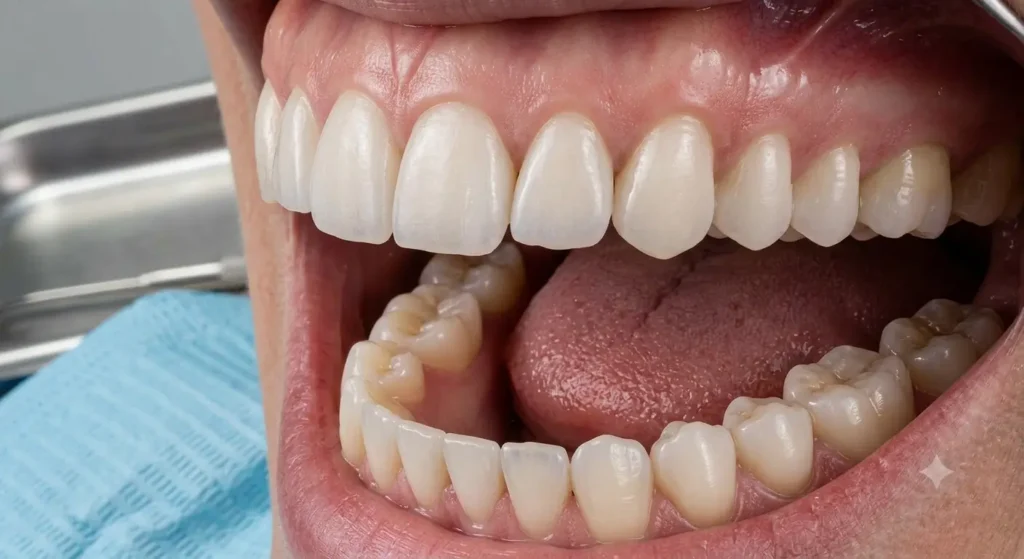
Porcelain veneers are the most transformative single cosmetic procedure in modern dentistry. A well-designed set can correct colour, shape, size, symmetry, and minor alignment in one treatment — the kind of result that used to require multiple procedures and multiple providers.
But before any of that, the question most patients ask first is simple: what do they actually cost?
This guide gives you honest, realistic pricing for Alabama patients, explains every factor that affects the final number, and helps you decide whether veneers are the right path for your specific smile goals.
What Are Dental Veneers?
Dental veneers are thin shells — typically made from porcelain or composite resin — bonded directly to the front surface of the teeth. They change the colour, shape, length, and surface texture of the tooth while preserving most of the underlying enamel.
Veneers are commonly used to correct:
- Intrinsic staining that doesn’t respond to whitening (tetracycline staining, fluorosis)
- Chips, cracks, and minor fractures on front teeth
- Uneven tooth edges from wear or genetics
- Slightly short or small teeth that affect smile proportions
- Gaps and minor spacing between front teeth
- Minor alignment irregularities that don’t warrant orthodontic treatment
To see what’s achievable for Madison, AL patients, browse the before and after gallery at Madison Dental Care.
Veneers Cost In Alabama: Price Ranges By Type
Porcelain Veneers (the gold standard)
Porcelain veneers are fabricated by a dental laboratory from detailed impressions of your teeth, then bonded in place at a second appointment.
- Per tooth (Alabama): $950 – $2,000
- Madison/Huntsville area typical range: $1,000 – $1,500 per tooth
- Full smile (6–8 teeth): $6,000 – $14,000
- Full smile (10 teeth): $10,000 – $18,000
Composite Resin Veneers (direct/chair-side)
Composite veneers are sculpted directly onto your tooth surface in a single appointment by your dentist. No lab work involved.
- Per tooth: $300 – $600
- Full smile (6–8 teeth): $1,800 – $4,800
The lower cost of composite reflects the material and process differences — not an equivalent outcome. Composite is an excellent option for minor corrections and budget-conscious patients, but it does not match porcelain for aesthetics, durability, or stain resistance.
What Determines the Final Price?
1. Number Of Teeth
Most patients veneer the six to ten teeth that are visible when smiling naturally. Each tooth is priced individually. Covering more teeth produces a more uniform result but increases the total investment.
2. Porcelain vs. Composite
Porcelain requires laboratory fabrication, which involves lab fees, additional appointments, and temporary veneers during the fabrication period. These costs are reflected in the higher price per tooth.
3. Complexity of Your Case
Teeth with more significant structural issues — existing chips that need buildup, uneven gum lines that require tissue correction, or heavily worn edges — require more clinical time and precision, which affects pricing.
4. Preparatory Treatment
If decay, gum disease, or significant misalignment needs to be addressed before veneers are placed, those are separate procedures with their own costs. Veneers are placed only on a healthy foundation — this is not a detail that can be skipped.
5. Your Dentist’s Experience and Laboratory
Cosmetic dentistry requires artistic skill alongside clinical training. A cosmetic dentist who works consistently with a high-quality dental ceramist — and who invests in digital smile design tools — typically charges higher fees that reflect both the process and the predictability of the outcome.
At Madison Dental Care’s cosmetic dentistry department, our approach combines digital planning with experienced clinical execution so that what you see in your preview matches what you get in your result.
How Long Do Veneers Last?
This is where the investment case for porcelain veneers becomes clear.
A meta-analysis published in the Journal of Evidence-Based Dental Practice (2018) reported:
- Porcelain veneer survival rate at 10 years: ~94%
- Porcelain veneer survival rate at 20 years: ~83%
With proper care — not using teeth as tools, avoiding nail-biting, wearing a night guard if you grind — many patients have their original veneers at the 20-year mark. Over that period, the annual cost of a $1,200 porcelain veneer is approximately $60 per year — less than most people spend on coffee in a month.
Composite resin veneers typically last 5–7 years before needing replacement or touch-up. Their lower upfront cost often approaches the total cost of porcelain when factored over a 15-year period.
Does Insurance Cover Veneers?
In the vast majority of cases, dental insurance does not cover veneers placed for cosmetic purposes. Insurance plans classify elective aesthetic procedures as outside standard benefits.
One exception: if a veneer is placed to restore a structurally compromised tooth that could otherwise require a crown, some plans may provide partial coverage under “major restorations.” This requires pre-authorisation and a documented clinical rationale. Your dentist’s office can help determine whether your specific situation qualifies.
Patients can use HSA (Health Savings Account) or FSA (Flexible Spending Account) funds toward veneers, which effectively provides a tax-discount on the investment.
For patients seeking financing, CareCredit payment plans are available at Madison Dental Care — including 0% interest promotional periods.
Veneers vs. Teeth Whitening: Which Should You Choose?
If your primary concern is tooth colour alone, professional teeth whitening in Madison, AL is a dramatically less expensive starting point and can produce 6–10 shades of improvement.
Whitening is the right first step when teeth are naturally shaped, undamaged, and the only concern is shade. It is not appropriate for intrinsic staining, chips, shape irregularities, or existing dental restorations (crowns, fillings — none of which respond to bleaching agents).
If your concerns extend beyond colour, or if whitening has already been tried without achieving the result you wanted, veneers may be the more complete solution.
FAQs
Q1. Are veneers permanent?
A: Porcelain veneers require a small amount of enamel removal during preparation, which means they are considered a permanent commitment — the teeth will always need to be covered by some restoration going forward. Composite veneers often require minimal or no enamel reduction, making them a more reversible option.
Q2. Can veneers be whitened later if they stain?
A: No. Porcelain veneers are highly stain-resistant but cannot be whitened with bleaching agents. If you’re planning whitening and veneers, whiten your natural teeth first, then have your veneers matched to the new shade.
Q3. Do veneers look fake?
A: Poorly designed veneers look fake. Well-designed porcelain veneers — matched to your natural tooth colour, contoured to your gum line, and appropriate for your face shape — are indistinguishable from natural teeth. This is why choosing an experienced cosmetic dentist matters more for veneers than for almost any other procedure.
Q4. How many veneers do I need for a natural-looking result?
A: Most patients veneer the teeth visible in their natural smile — typically 6 to 8 upper front teeth. Doing fewer can create a noticeable contrast between treated and untreated teeth. Your cosmetic dentist will assess your smile line and recommend the appropriate number.
Start with a Smile Consultation in Madison, AL
The best way to understand what veneers could do for your specific smile — and what they would cost — is a cosmetic consultation with our team.
We use digital smile design tools to show you a preview of your result before any treatment begins. No guesswork, no surprises.
Call us at (256) 772-2626 or Schedule a Cosmetic Dentistry Consultation in Madison, AL